"I've been using Chakra in every React project I've built for the past three years"

Steven Secreti
Founder / Lead Engineer
Published At
Category
Website
👋🏽 A bit of context
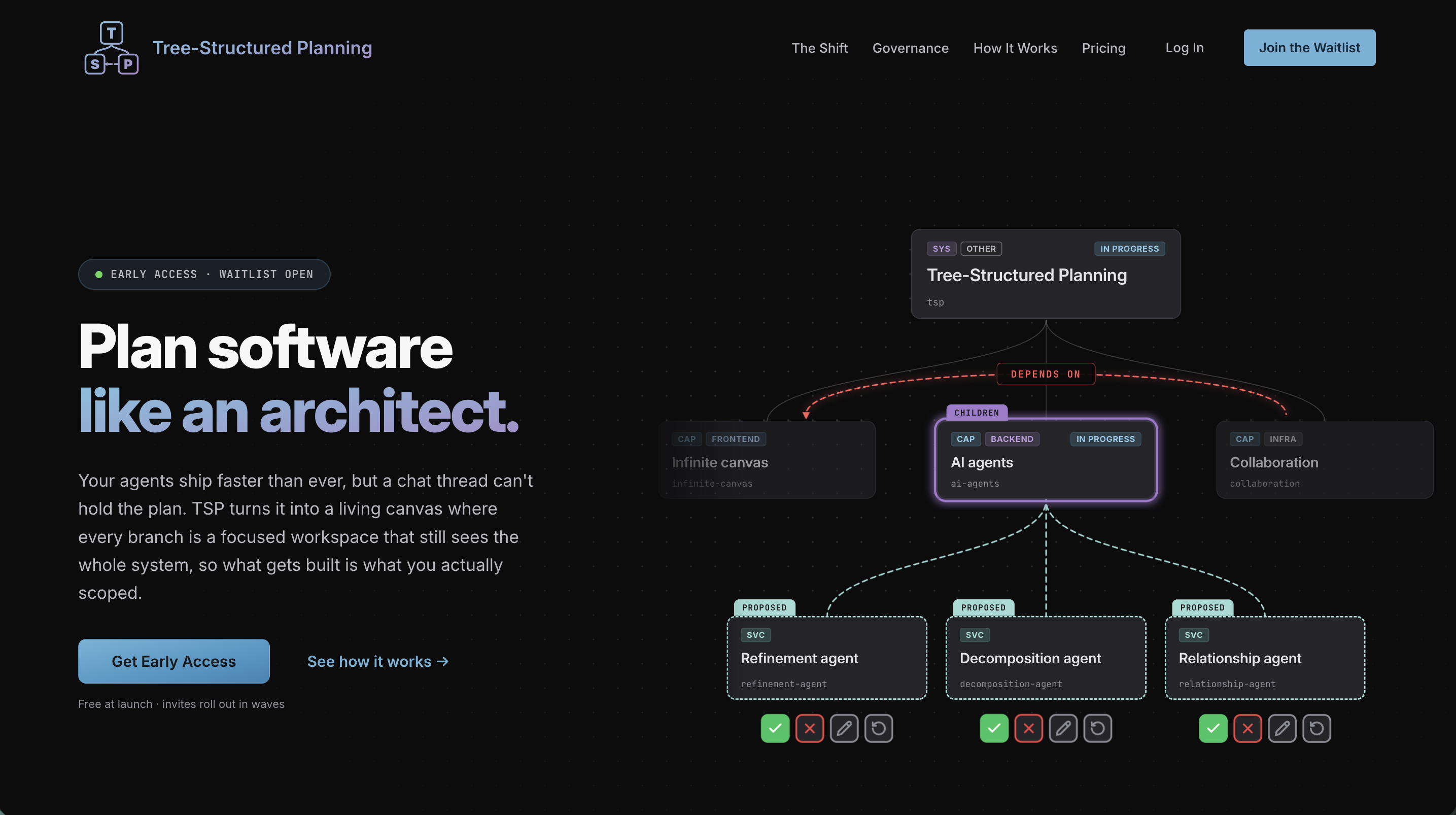
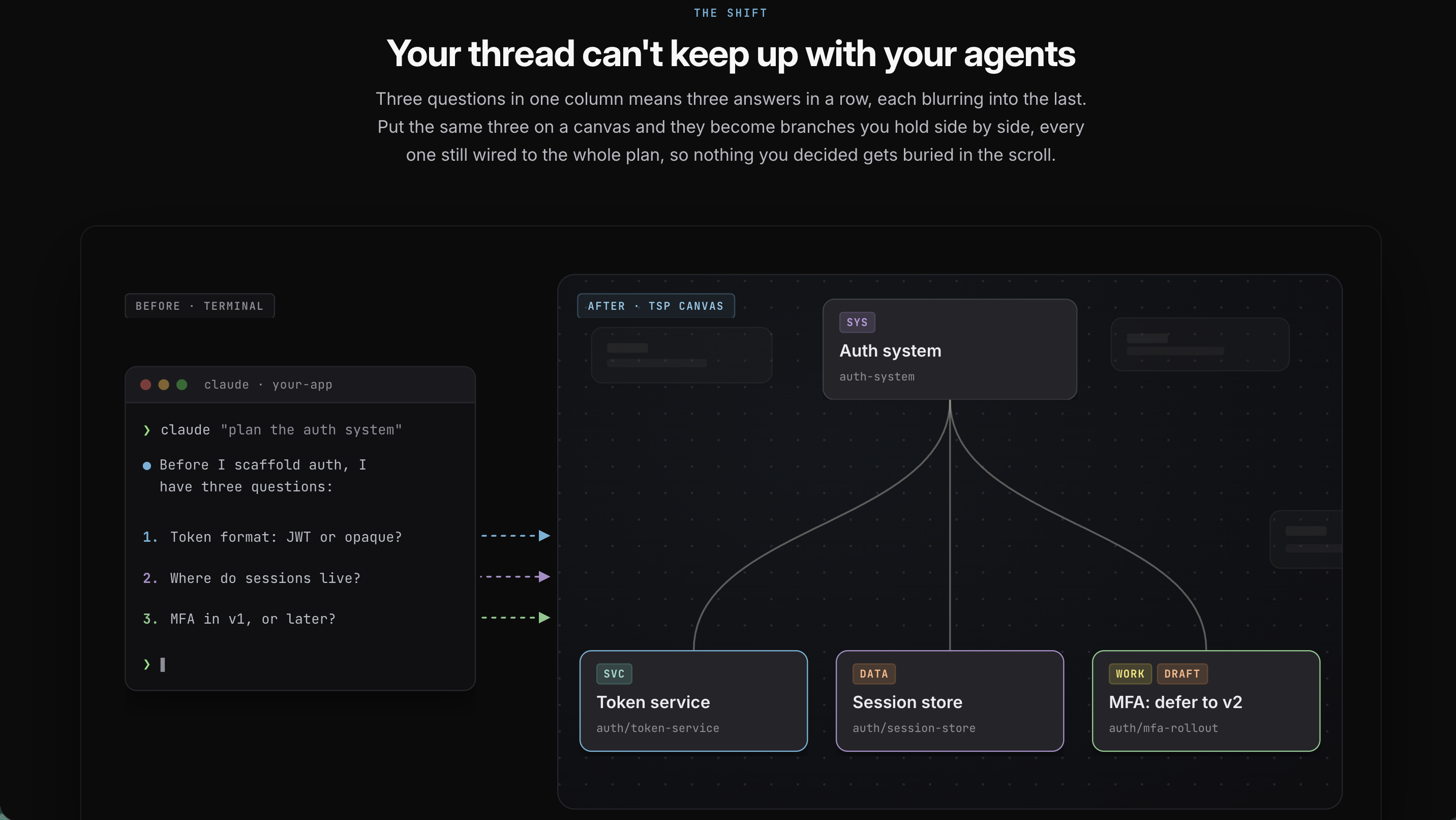
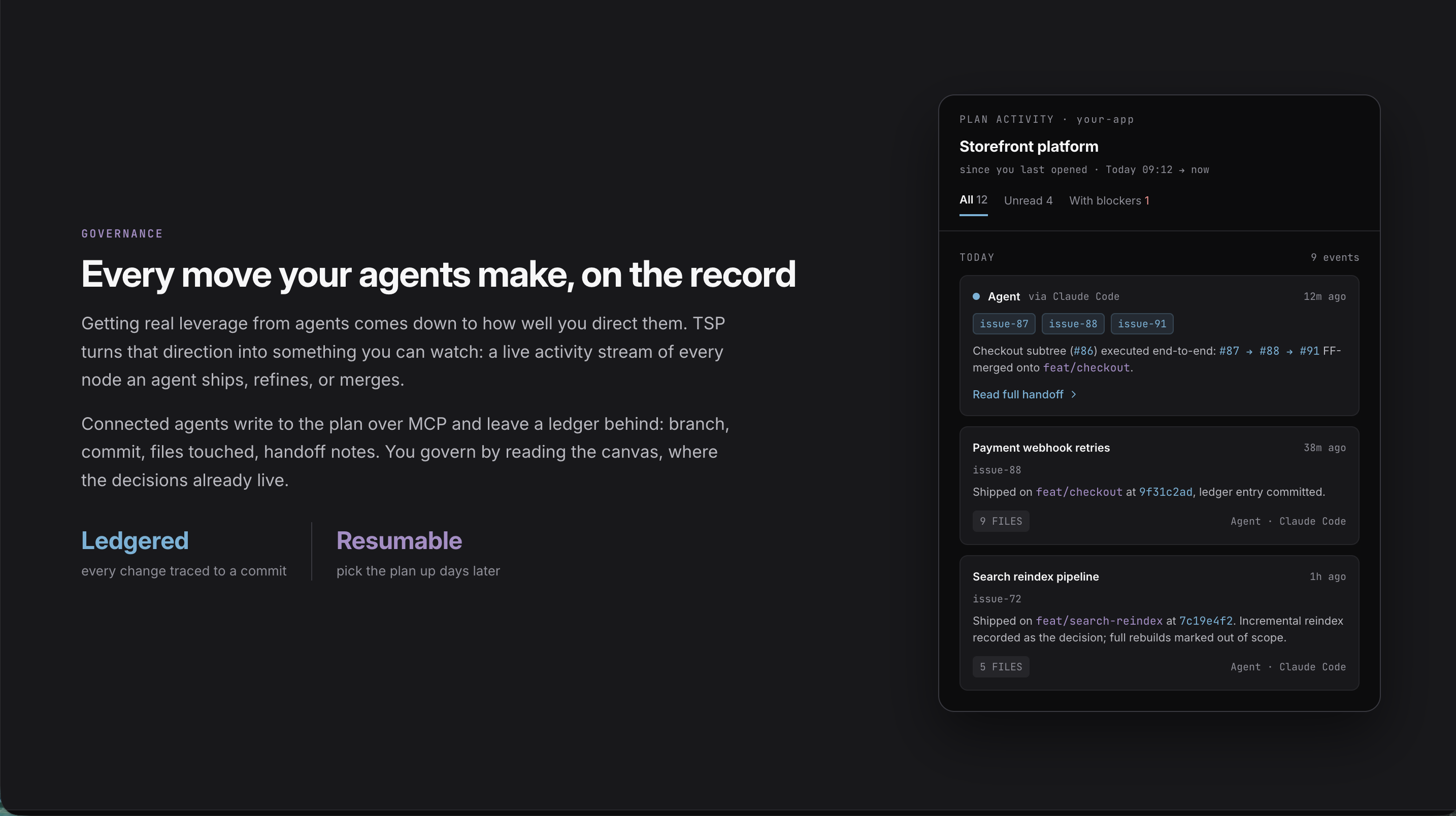
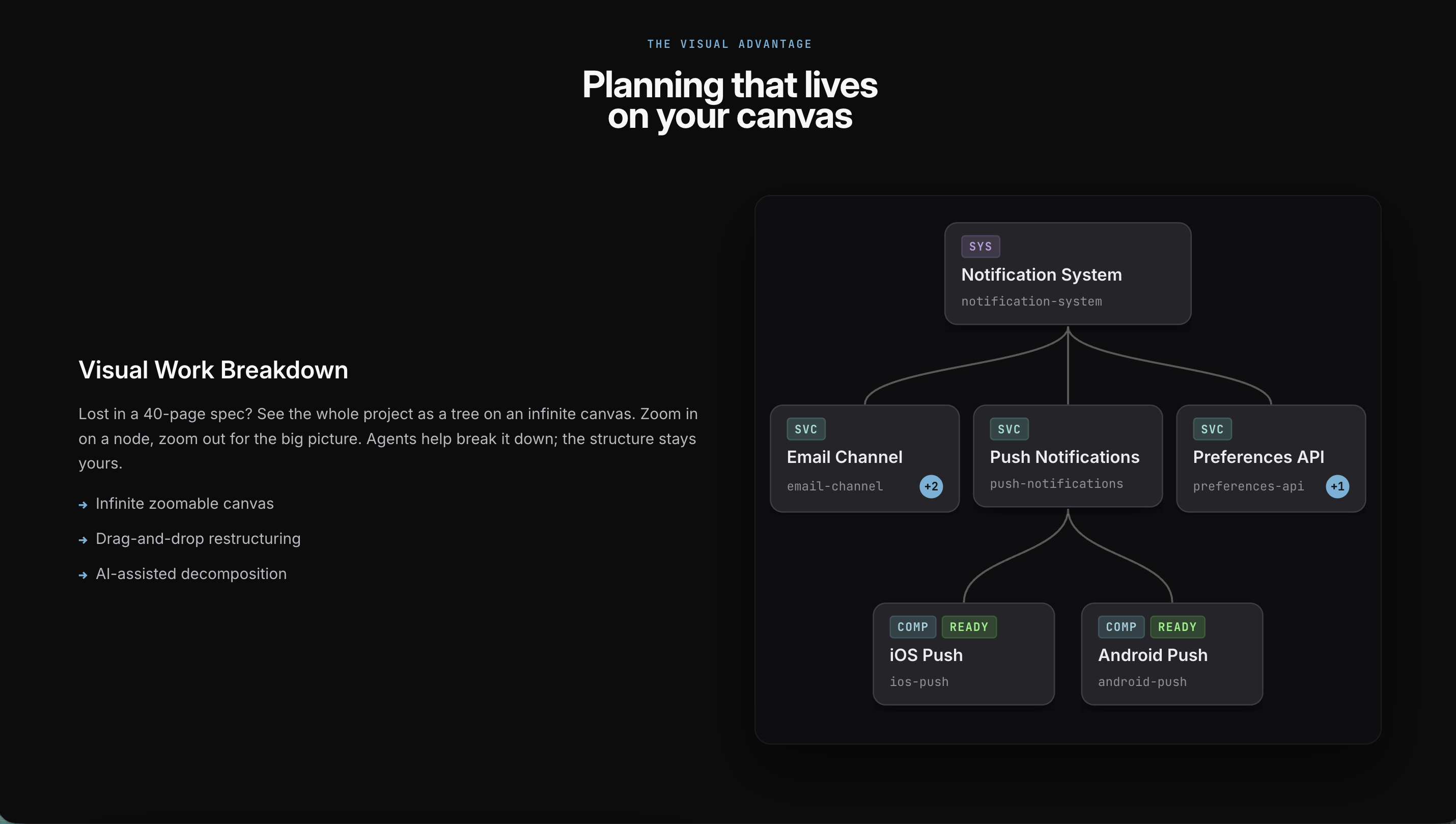
Tree-Structured Planning is a shared canvas I built for planning software with AI coding agents as a visual tree, turning the plan a chat thread can't hold into branches that each act as a focused workspace while still seeing the whole system. I built it for scoped engineering work where what gets built needs to match the plan.
I'm Steven Secreti, the founder and lead engineer behind it.
"I discovered Chakra back in v2 and never looked back."
I'd already been building with Chakra for years, so by the time I started this product, it wasn't a difficult decision to make. I chose Chakra because it worked well from experience.
Why Chakra became my default
Two things kept me loyal to that decision. First, the component catalog. Chakra comes with accessible, composable primitives already built, so I don't have to build a dialog or a menu from scratch before starting the real work. Second, and more important, Chakra lets me customize and extend everything the way I want. It never boxes me in.
"v3 made it easier to define our entire design language in one place and expose components as typed contracts instead of loose JSX."
v3 made that even better. Its semantic tokens let me define our whole design language in one place, a dark-first system we call Obsidian Pastels. Its recipe system let me turn components into typed contracts instead of loose JSX.
Our codebase follows one rule: the right way should be the only way that compiles. Chakra v3's tokens and recipes made that possible on the frontend. Nothing else could.
The power of slot recipes
What surprised me most about Chakra was slot recipes.
"Chakra turned theming from the thing I expected to babysit into the thing that made every new feature obviously easy."
I expected to hand-build most of our multi-part components: the tree node cards, the canvas toolbar, the inspector panels. Instead, slot recipes let me define all of it, every slot, every variant, every state, in one file using semantic tokens. Typegen checked the slot names for me at compile time.
"The payoff I didn't see coming was at the consumer level." Once a recipe worked, adding a new variant, or even a new component, took one or two files instead of five.
Moving from v2 to v3
Moving to v3 came with one snag.
"The framework wasn't the problem. My habits were."
The only thing that tripped me up was my own habits. After three years on v2, I kept reaching for the old way of using Chakra.
However, after spending some time to read the v3 docs, I was able to rebuild a few components properly, using createSystem, semantic tokens, and recipes, until the new patterns stuck. A week in, v3 felt more natural than v2 ever had, and I stopped missing the old way entirely.
Advice for developers
My advice for developers: go for it, and commit to the token and recipe system from day one. The biggest mistake I've seen is treating Chakra like a box of ready-made components, then switching to inline styles the moment something custom is needed.
That leads to the same scattered, unmaintainable styling I'd have had without it.
To get the best from Chakra UI, I treat the theme like a contract. I define the tokens, build variants as recipes, and let everything else consume them. We built an opinionated, dark-first design system and a dense canvas UI on top of v3, and it never felt like a fight.
"I think Chakra is the strongest option out there right now."